
Radiated emissions
How much a board, instrument or product radiates, and at which frequencies. Run early enough, it catches the layout and shielding problems that are expensive to fix once a design is finished.
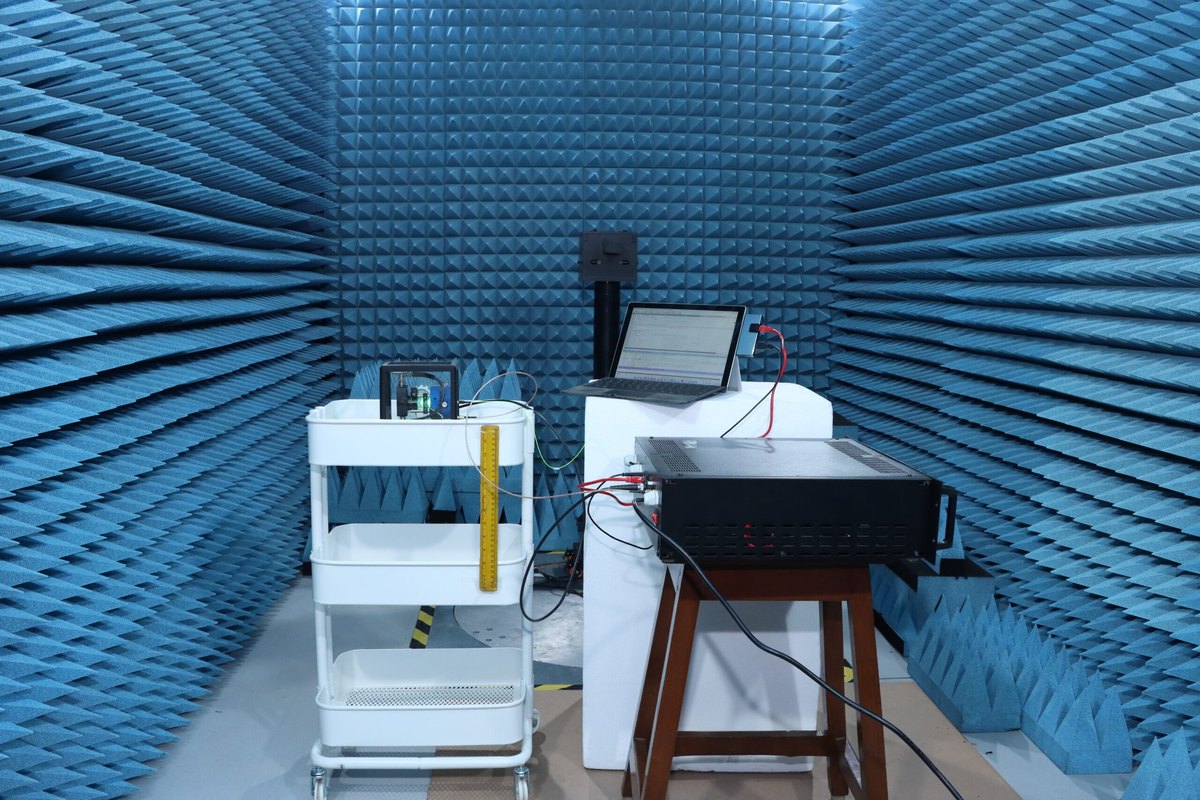
A shielded anechoic chamber, for measurements a lab bench cannot give you.
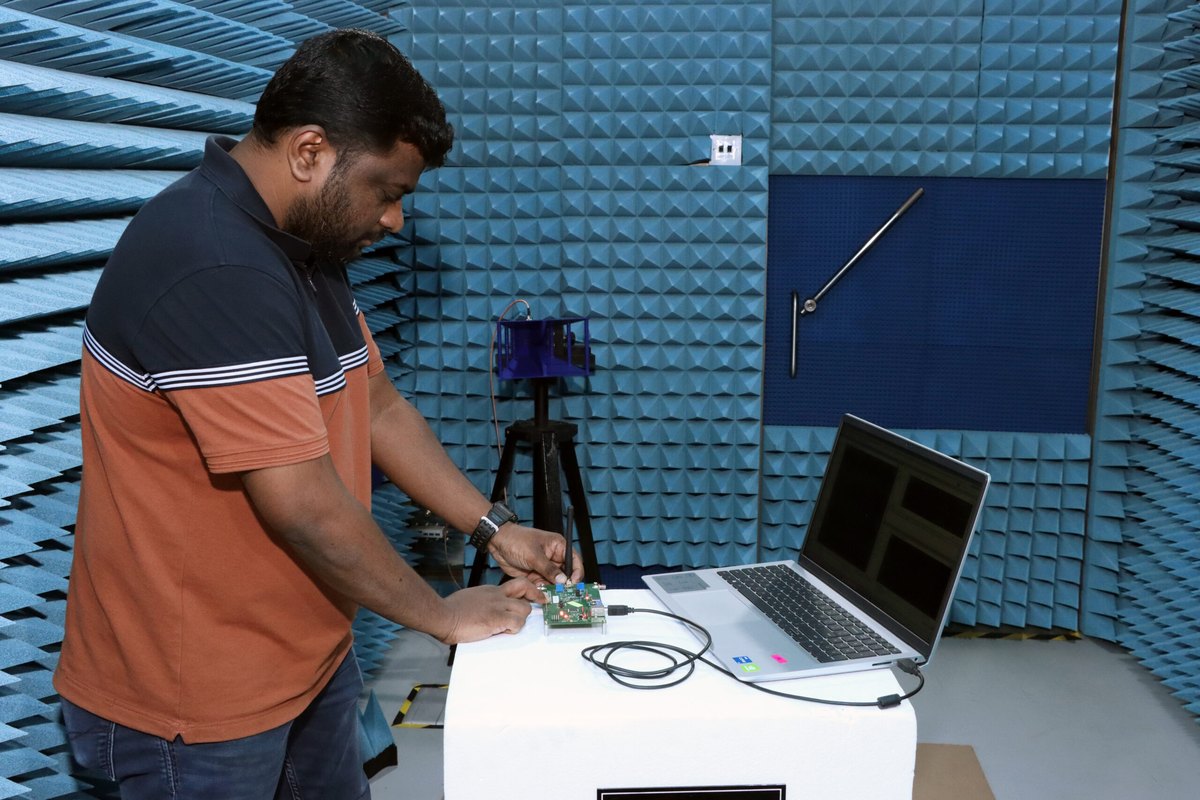
The EMI/EMC test facility is part of the advanced measurements wing of WEL, set up in September 2022. At its centre is a shielded anechoic chamber: a screened room lined on every surface with pyramidal radio-frequency absorber.
The lining does two jobs at once. It soaks up reflections, so a signal measured inside the room has travelled straight from the device to the antenna rather than bouncing off the walls; and the screening keeps the broadcast, mobile and Wi-Fi traffic of a busy campus out, so that emissions far weaker than the ambient noise floor can still be seen. Together they make the room a controlled, repeatable electromagnetic environment — something an ordinary lab bench can never be.
How much a board, instrument or product radiates, and at which frequencies. Run early enough, it catches the layout and shielding problems that are expensive to fix once a design is finished.
A reflection-free room is the right place to look at how an antenna or a wireless module actually behaves, without the walls and benches of the lab shaping the result.
Work that simply needs a quiet environment — low-noise and precision instrumentation, magnetometry, and research prototypes from groups across the department.
The facility is meant for design-stage measurement and research work. Formal certification against a published standard is done at accredited test laboratories; what this chamber gives you is the chance to find the problems long before you get there.


The chamber is available to students, research groups and departmental projects. Time on it is arranged through the special facilities request, and the lab staff will help you set a measurement up.