WEL PCR
Low-cost molecular sensing for affordable diagnostics
Why it was built
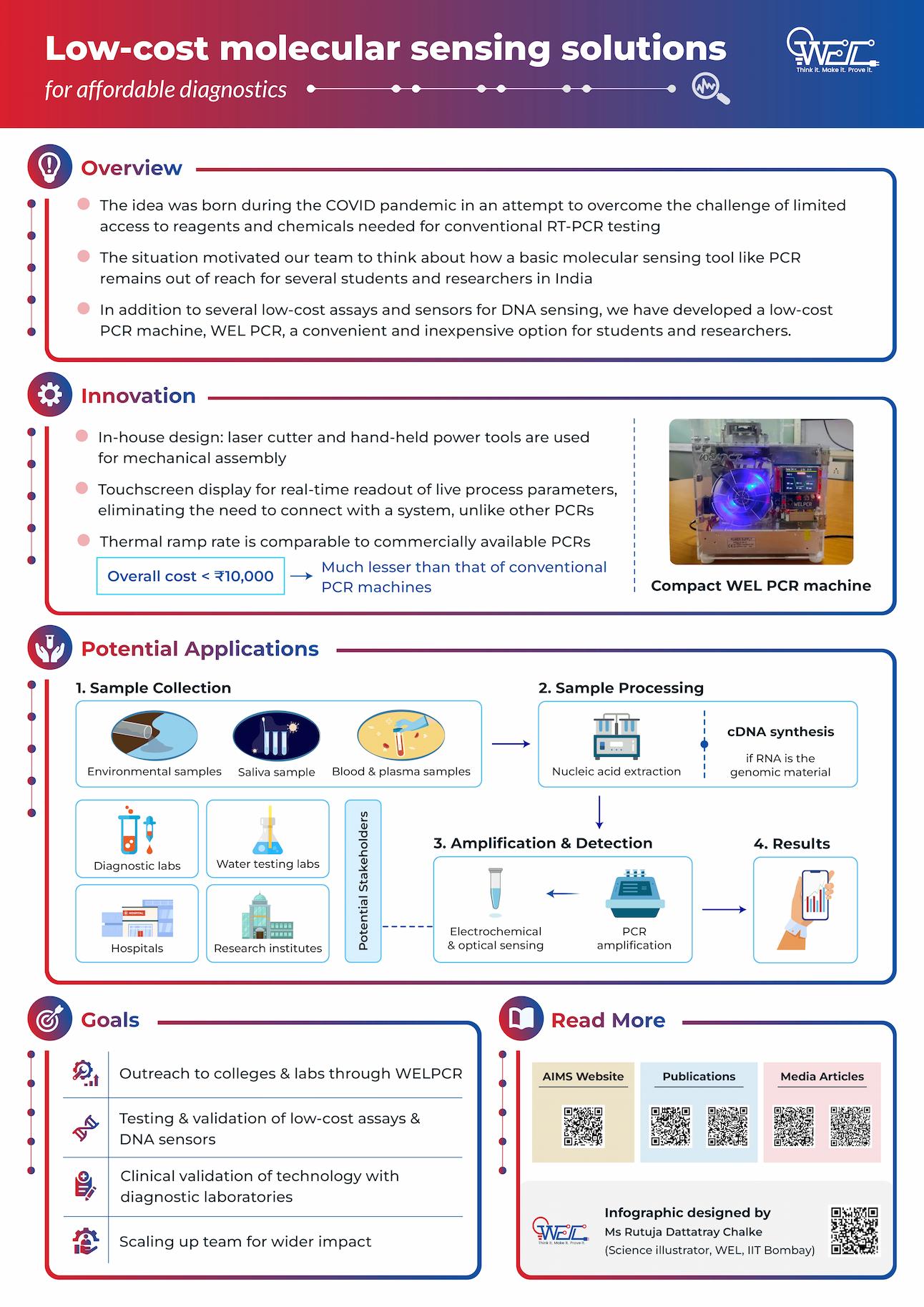
The idea was born during the COVID pandemic, in an attempt to overcome the challenge of limited access to the reagents and chemicals needed for conventional RT-PCR testing.
That situation prompted the team to think about how a basic molecular sensing tool like PCR remains out of reach for many students and researchers in India. Alongside several low-cost assays and sensors for DNA sensing, the lab developed WEL PCR, a convenient and inexpensive option for students and researchers.
What makes it different
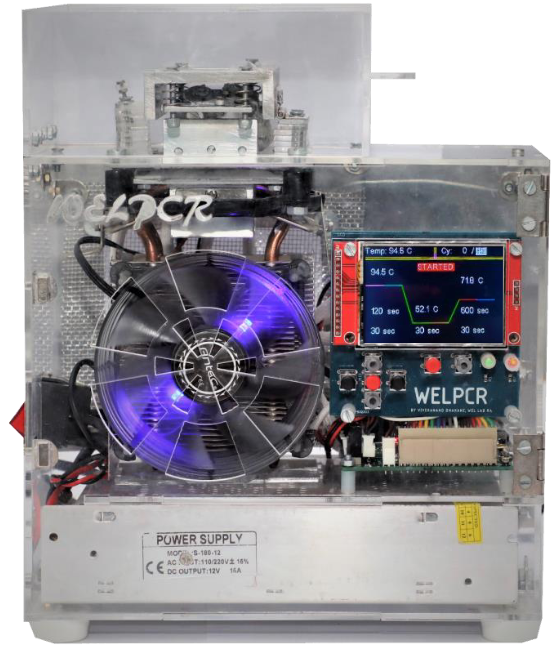
- In-house design — the laser cutter and hand-held power tools in the lab are used for the mechanical assembly
- Touchscreen display for real-time readout of live process parameters, so it does not need to be connected to a computer or mobile device to be configured and operated, unlike other PCRs
- Thermal ramp rate comparable to commercially available PCRs
- Bill of materials under ₹10,000, about USD 120 — far below conventional PCR machines
The design is inspired by OpenPCR, is open-source, and is made available to developers who want to assemble their own units.
Where it fits
The workflow runs from sample collection — environmental samples, saliva, blood and plasma — through nucleic acid extraction and cDNA synthesis where RNA is the genomic material, then PCR amplification with electrochemical and optical sensing, to the result.
Potential users include diagnostic labs, water testing labs, hospitals and research institutes.
Goals
- Outreach to colleges and labs through WEL PCR
- Testing and validation of low-cost assays and DNA sensors
- Clinical validation of the technology with diagnostic laboratories
- Scaling up the team for wider impact